A Gentle Guide to Returning to Puerto Rico
The first morning back can hold more than the sound of coquíes or the warmth gathering on the balcony. It can bring relief, tenderness, disorientation, and an unexpected question: Why does being home feel so complicated? This guide to returning to Puerto Rico is for the part of you that wants to honor the practical work of relocating while making room for the inner experience, too.
Returning is rarely a simple reversal of leaving. Even if you know the streets, the food, the family rhythms, and the language in your body, you have changed. So has the island. A more grounded return begins when you stop asking yourself to feel only grateful or only certain.
A guide to returning to Puerto Rico begins before the flight
Some people return with a clear plan: a job, a family need, a desire to raise children near grandparents, or a longing for a slower and more connected life. Others arrive after years away because the pull of home has become too strong to ignore. Both experiences can hold real hope alongside unease.
Before focusing only on logistics, take a quiet inventory of what you are carrying. What do you imagine Puerto Rico will give you? What are you afraid it may take from you? Perhaps you are returning to familiarity, but not necessarily to ease. Perhaps you are returning with a partner who does not yet feel at home here, or with children whose sense of home is rooted somewhere else.
It may help to write down three things: what you are looking forward to, what you expect to grieve, and what you are not yet sure how to name. This is not a plan for controlling the transition. It is a way of meeting yourself honestly before the pace of moving takes over.
Let the practical work be practical
A return asks for patience with details: housing, schools, work arrangements, transportation, health care, insurance, paperwork, and the everyday question of where to buy what you need. These tasks can become consuming, especially when systems feel unfamiliar despite your connection to the island.
Try not to interpret logistical frustration as proof that you made the wrong decision. Friction is part of many moves. In Puerto Rico, the adjustment may also include navigating different timelines, family expectations, power interruptions, heat, traffic, or the reality that a familiar place can feel newly demanding when you are responsible for a household or career within it.
Choose a few anchors instead of trying to organize your entire new life at once. A reliable morning routine, one person you can call, a place to walk, and a small corner of your home that feels settled can matter more than a perfectly finished to-do list. The nervous system often responds to repetition and predictability before the mind has found the right explanation.
Expect more than one feeling at a time
Returning home can awaken joy and grief in the same afternoon. You may feel deeply moved by a family meal and then need distance. You may love hearing Spanish around you again while also noticing how your own language has shifted. You may feel privileged to return and, at the same time, mourn the life, friendships, or version of yourself you left behind.
Mixed feelings are not evidence of disloyalty to Puerto Rico or to the place you lived before. They are often evidence that your life has been real in more than one place.
This can be especially true for people who have lived between cultures for years. You may no longer fit the idea of who others expect you to be. Relatives may assume your return means immediate availability. Friends may expect you to pick up where things left off. Yet a return is not a performance of belonging. It is a relationship that needs time to become current.
When guilt enters the picture, pause before letting it make your decisions. You can love your family and still need boundaries. You can feel fortunate to be back and still miss your old home. You can be committed to the island without carrying every demand placed on you.
Build belonging through small, repeatable choices
Belonging is often less dramatic than we imagine. It grows through ordinary contact: learning your neighborhood at the pace of your actual days, returning to the same café, speaking with a neighbor, finding a beach or park where your body softens, and allowing a new routine to take shape.
Resist the pressure to make every weekend meaningful. When returning to Puerto Rico, it is easy to feel that you should be seeing family, rediscovering the island, supporting local businesses, enjoying the weather, and proving that the move was worth it. That much pressure can turn beauty into another obligation.
Instead, notice what genuinely restores you. For one person, that may be dancing, cooking familiar food, or being near the ocean. For another, it may be quiet afternoons at home, regular movement, or time away from social expectations. There is no correct way to return.
If you are relocating with a partner or family, make space to ask how each person is adjusting. The person who initiated the move may be carrying responsibility and hope. The person who followed may be carrying loss, loneliness, or uncertainty. Children may express their adjustment through irritability, withdrawal, excitement, or a sudden need for reassurance. Listening without rushing to solve can make the transition feel less isolating for everyone.
Make room for the body’s pace
A major move is not only a story you tell yourself. It is an experience your body has to process. You may notice trouble settling, a shortened temper, exhaustion, restlessness, or the strange feeling of being both overstimulated and underconnected. These responses deserve gentleness rather than judgment.
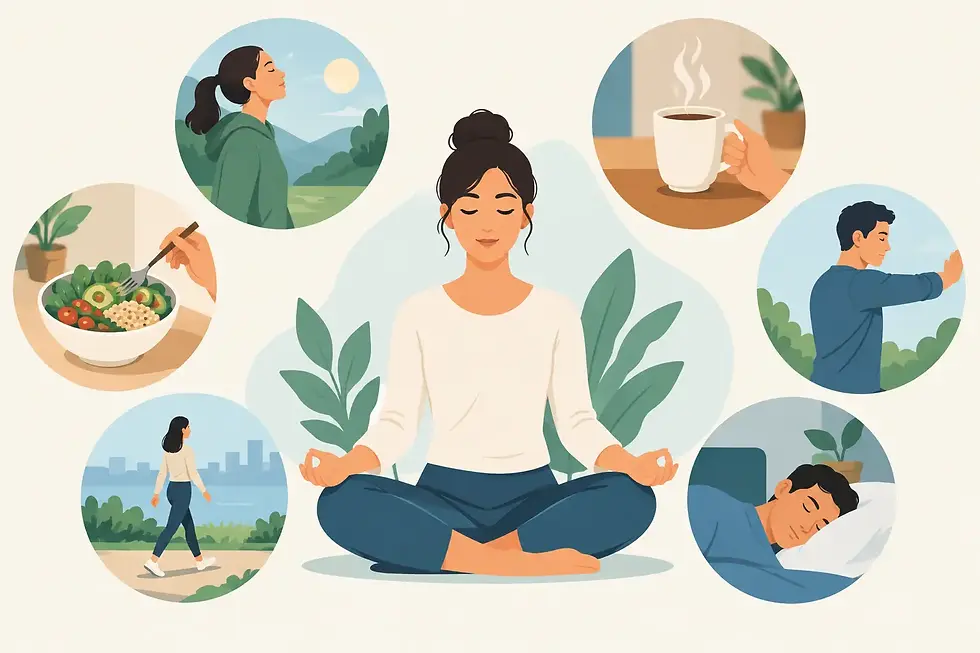
Simple practices can help you slow down enough to hear what is happening within. Take a few minutes before checking your phone in the morning. Feel your feet on the floor. Step outside and notice temperature, sound, and breath. Place a hand on your chest or abdomen when you feel pulled into urgency. None of this needs to be elaborate. The point is to offer your system a signal that it does not have to solve the entire future right now.
Mindfulness is not a way to make difficult feelings disappear. It can be a way to stay close to yourself while those feelings move. From that steadier place, choices about work, relationships, family, and home often become clearer.
Seek support that understands the in-between
Some transitions ask for more support than friends and family can provide, even when they care deeply. A protected space for psychotherapy can be particularly meaningful when returning brings up old family roles, relationship strain, overwhelm, recurring patterns, or questions about identity and purpose.
For bilingual adults in Puerto Rico or elsewhere, being able to speak in English, Spanish, or both can matter. Certain memories arrive in one language. Certain emotions become more available in another. A thoughtful therapeutic relationship can make room for that complexity, along with somatic awareness, contemplation, and practical attention to what daily life is asking of you.
Cristina Bonnet offers individual psychotherapy in San Juan and online for adults seeking a more grounded way through transitions, with room for the whole person rather than only the problem at hand.
You do not need to have a final answer about whether returning was right. Let home become something you meet gradually: through honest feeling, small acts of care, and the willingness to arrive more than once.